
You’re thinking about advertising on FeedBuzzard. Fair enough. I’ve spent more time than I care to admit digging into small tech sites that promise “targeted reach” and “less competition,” only to discover that half the information online is recycled marketing fluff. So let’s cut through the noise and talk about what FeedBuzzard actually is right now, how advertising works on it, and whether it’s worth testing.
What is FeedBuzzard in 2026?
FeedBuzzard.com is not a massive self-serve ad network like Taboola, MGID, or PropellerAds. It is an active tech and gadget content site. It publishes regularly across three main categories: Tech, World Tech, and Wearable Tech. The site runs on WordPress with the JNews theme (a common setup for digital magazines) and continues to post new articles through September and into October 2026. That activity level already puts it ahead of many small content sites that go quiet after a few months.
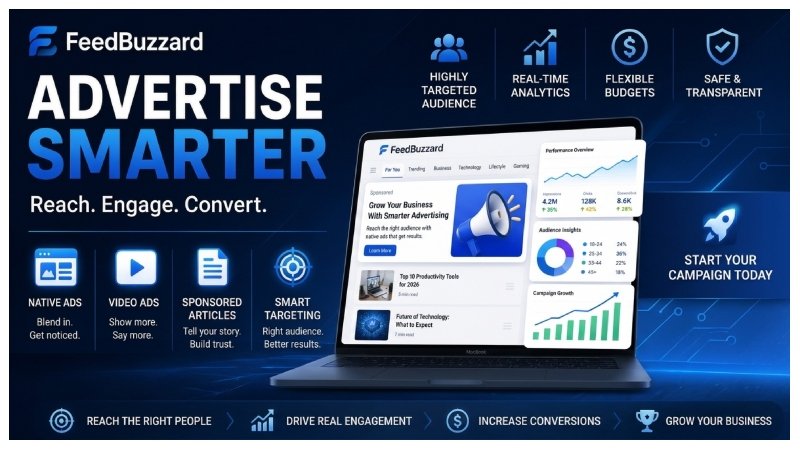
It does have an advertise page and accepts advertising inquiries. But there is no public rate card, no published traffic numbers, no media kit with audience demographics, and no self-serve campaign dashboard. Advertising happens through direct contact. That is an important distinction. You are not buying inventory from a large network with thousands of publishers. You are negotiating placement on one specific tech-focused site.
This is not necessarily a bad thing. It just changes the approach.
How Do You Actually Start?
Most people jump straight into “I want to run ads” mode. That usually leads to vague conversations and wasted time. Start by clarifying your own goals first.
Are you promoting a tech product, a SaaS tool, wearable hardware, a digital service, or something else that fits a tech-interested audience? FeedBuzzard’s content leans heavily into gadgets, software, AI tools, wearables, and broader technology trends. If your offer sits outside that world, the fit is probably weak.
Once you know the fit is reasonable, the practical steps look like this:
- Visit the site and locate the advertise or contact page.
- Reach out with a short, clear message. Include who you are, what you want to promote, your approximate budget range, preferred timeline, and what kind of results you care about (traffic, brand awareness, leads, etc.).
- Ask specifically for current monthly traffic, audience demographics if available, available ad formats (banner, sponsored article, newsletter mention, native placement, etc.), pricing options, and any past performance examples.
- Request everything in writing. Verbal numbers are easy to forget or misremember.
- Start with a small test budget you are comfortable losing. Do not treat the first campaign as a make-or-break moment.
That last point matters more than most people admit. Direct-publisher advertising almost always involves more uncertainty than a large self-serve platform. You are buying access to one audience, not an algorithmically optimized network.
Why Consider a Smaller Site at All?
Big platforms are crowded. Your ad competes with thousands of others for the same attention. On a smaller, focused content site, the competition for attention is lower by default. The readers who show up are already interested in technology topics. That self-selection can produce higher engagement when the offer is relevant.
At the same time, smaller does not automatically mean better. Without verified traffic numbers, you cannot know whether “less competition” is happening on a site that gets a few thousand visitors a month or a few hundred thousand. The only way to find out is to ask the site for data and, if possible, request a short trial placement.
Things You Should Check Before Spending Money
I have learned most of these the expensive way:
- Ask for recent traffic figures (monthly unique visitors and pageviews). Prefer numbers from Google Analytics or a similar verified source rather than vague claims.
- Request basic audience information if they have it: geographic distribution, device split, and any interest or demographic data.
- Clarify the exact ad formats available and where they appear (homepage, article pages, sidebar, newsletter, etc.).
- Get clear pricing. Is it a flat rate for a sponsored post? CPM? CPC? Weekly or monthly packages?
- Ask whether they can share examples of previous sponsored content or any performance metrics from past campaigns. Even one or two real examples are more useful than promises.
- Confirm how results will be reported. Will you get click data, impression data, or just a screenshot?
- Get payment terms and cancellation policy in writing before transferring any money.
If the answers are vague, slow, or inconsistent, that is useful information by itself.
Is It Actually Worth Testing?
It depends on your situation.
If you sell something that naturally appeals to people who read about gadgets, software, AI tools, or wearables, and you are comfortable with a smaller, more manual process, then a limited test can make sense. You may reach a more attentive audience than you would on a broad network where your message gets buried.
If you need predictable scale, detailed targeting options, real-time optimization, and transparent reporting from day one, you will probably move faster on larger platforms. FeedBuzzard is not built for that style of advertising.
There is no universal “best” place to advertise. There is only what matches your offer, your budget, and your willingness to do the verification work yourself. The only reliable way to know whether FeedBuzzard works for you is to run a small, controlled test and judge the results yourself.
Bottom Line
Do not decide based on the volume of positive-sounding articles you find online. Many of those pieces recycle the same unverified claims. Look at the actual site. Check how regularly it publishes. Contact the team directly. Ask for numbers. Start small. Watch what the data shows.
FeedBuzzard can be a reasonable place for certain tech-related offers, especially if the audience match is strong and the pricing is transparent. It can also be a waste of budget if the traffic turns out to be too low or the audience is not the one you need. You will not know which category it falls into until you ask the right questions and run a proper test.
If you decide to move forward, keep the first campaign modest, document everything, and let the results decide the next step. That approach works on almost every advertising opportunity, big or small.